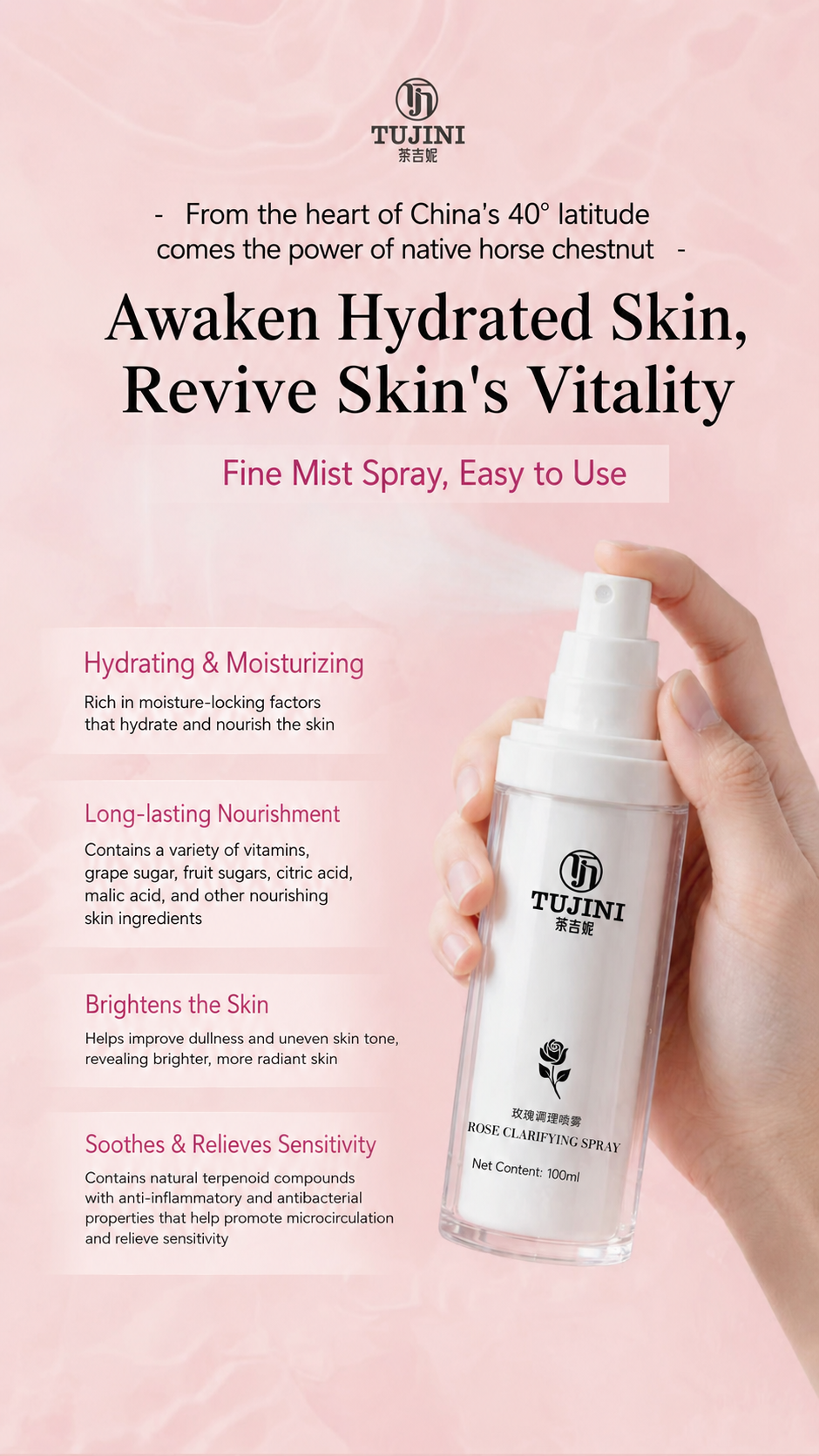
Most Rose Waters Are Just Scented Water — Here’s What Real Hydrosol Looks Like
I was speaking with a spa director in Ho Chi Minh City last week, and she didn’t sugarcoat it:
“Most rose waters are just scented water.”
She’s right — and it points to a deeper transparency problem in the skincare industry.
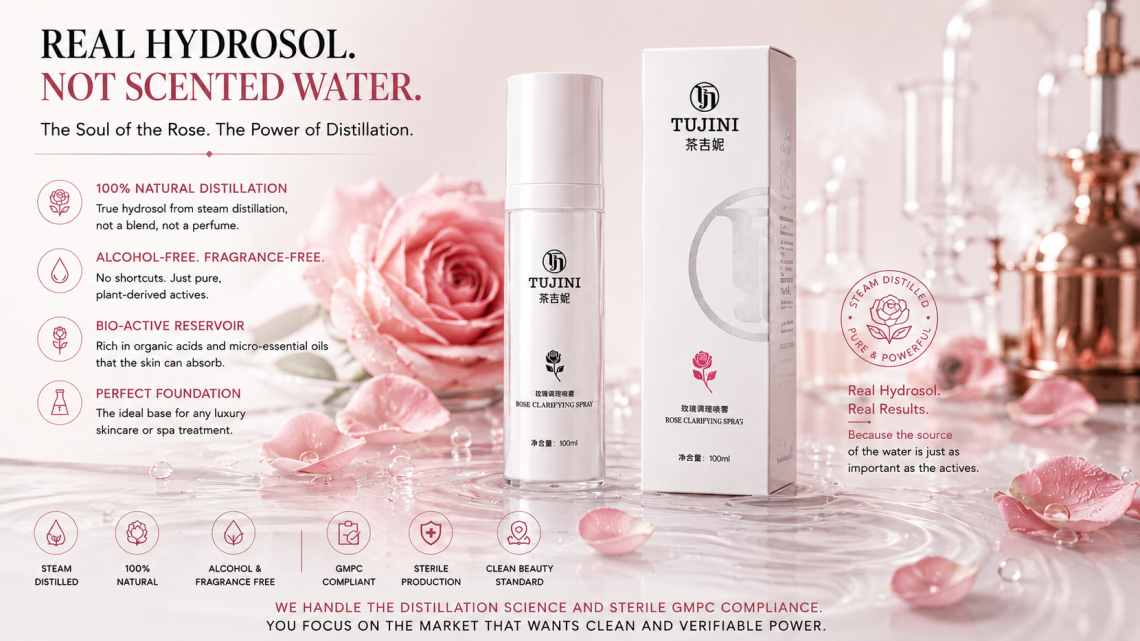
What many brands label as “rose water” is often nothing more than diluted fragrance. It smells pleasant, but delivers little to no biological value.
True rose hydrosol is different.
It is the condensate collected during essential oil distillation — the pure, water-soluble fraction of the plant. This is where the real actives live: organic acids, trace micro-essential oils, and bio-compatible compounds that the skin can actually absorb.
But here’s the catch:
Producing authentic hydrosol is expensive, technically demanding, and difficult to stabilize. That’s why most suppliers avoid it.
At TuJiNi, we chose the harder path.
At our Optical Valley laboratories, our goal wasn’t to create a fragrance — it was to build a bio-active reservoir for the skin.
Our TuJiNi Rose Hydrosol is:
- 100% natural distillation-derived
- Alcohol-free
- Fragrance-free
- Preserved through sterile, GMPC-compliant processes
No shortcuts. No dilution. No synthetic enhancement.
What you get is a formulation rich in naturally occurring actives — designed not just to sit on the skin, but to integrate with it.
In high-end markets like Singapore and Thailand, sophistication is shifting.
It’s no longer just about what ingredients you use — but where they come from, and how they’re made.
Because in professional skincare, the source of your water is just as critical as your actives.
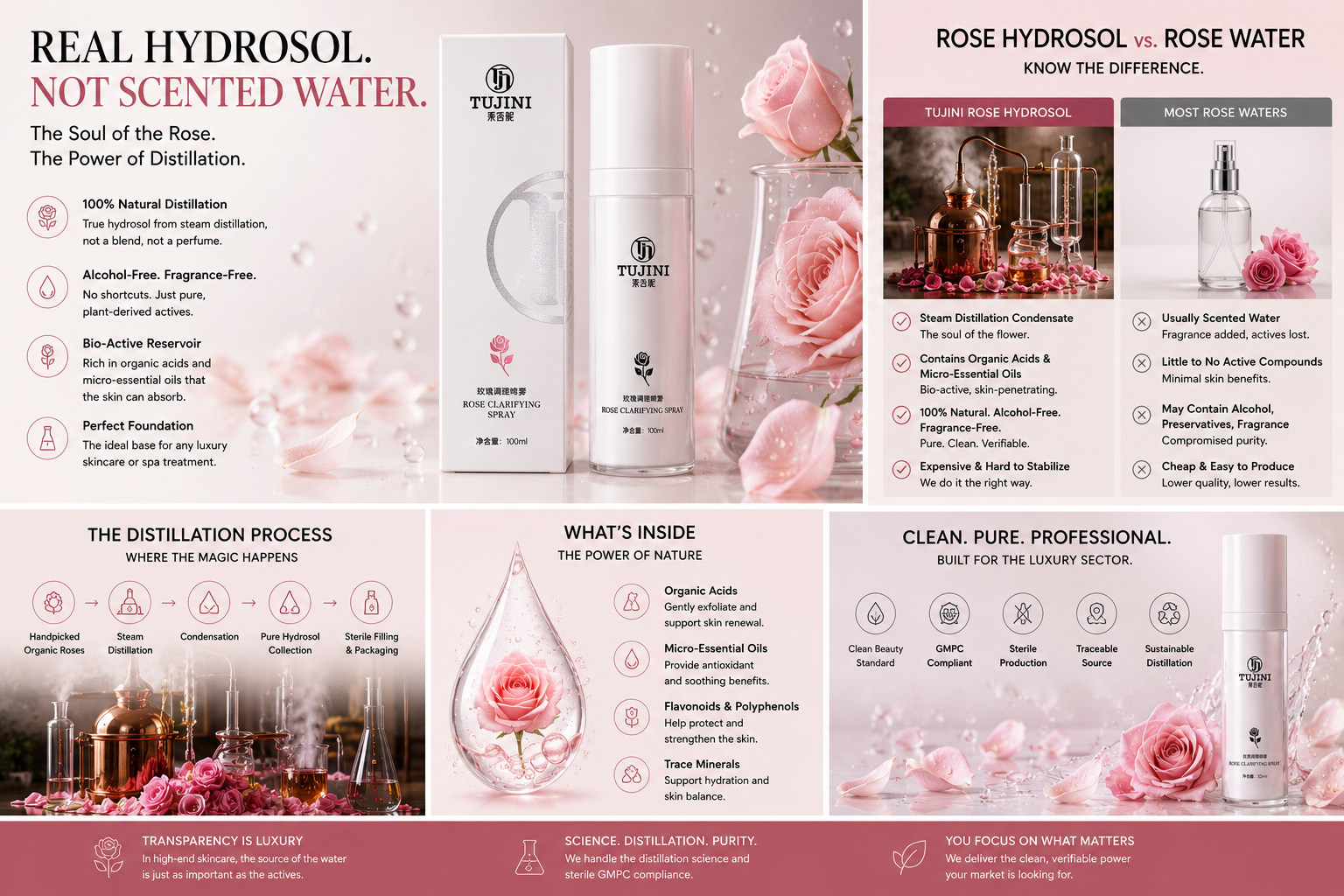
We take care of the distillation science, stabilization, and compliance.
You focus on delivering results to a market that demands clean, traceable, and verifiable performance.